Friday, July 15

Earthquaking experiences of Life


There were a few absentees at the mid July meeting, but then quality often trumps quantity (except if you're 'The Donald').   But Kathy and Megan came up trumps, with their reviews of the evening, the books and the recipe for the popular cake.  

Thanks to Megan for her review of the evening

We had an interesting meeting on Wednesday- only 6 able to be there.  


Kathy’s book ‘Rattled’ didn’t really pique anyone’s interest other than why she had chosen it! It was really a bit like reading someone’s diary - sometimes amusing, sometimes thoughtful but really not that enlightening. Kathy’s report really summed it up well (see below).

The highlight of the evening was hearing of Kathy’s life experiences - teenage pregnancy, moving to California with her best friend to protect her ’change of shape’ from becoming general knowledge to her family and work colleagues. Subsequently meeting her later to be husband. Her whirlwind romance, engagement, wedding, honeymoon then settling in Australia were riveting listening. Kathy’s memoirs would certainly be a wonderful read - can’t wait for the publication!!! 

So when we came to review Garden of Broken Dreams it was probably a little underwhelming! 

There was no reason for the choice of book other than I was looking for another title which had been suggested - couldn’t find that one and saw this. As we’ve never reviewed a book about Haiti I thought we’d give it a go! 

Some found it a bit hard to get going but with perseverance thought it was worth the read. A real eye opener with regard to the living conditions, poverty, corruption, lack of employment and general malaise of the male population. As Cherrie noted “A story of brave and/or self sufficient women!” We we’re all dismayed and appalled at the bullying & abuse given to the daughters (the Idea being to make them resilient and able to make a living for themselves - following in their mother’s footsteps). 

There were times in the narrative where you were unsure what was real and what was imagination- talking about your two selves and your other half.  

I expected there to be an emphasis on Voodoo (generally Haiti is well known for its superstitions and black magic) however there was no mention. The characters were semi-religious (Catholic) but this also was not really part of the story although I’m sure religion is an important part of to some of these people. 

The earthquake really did happen and it’s devastating consequences hard to fathom. The earthquake in 2010 killed over 200,000 people and the one in this book whilst not having the same number of deaths still resulted in nationwide destruction. How they could manage to rebuild a country with such a lack of infra-structure is hard to imagine.   It certainly wasn’t a happy book and perhaps not appealing to some - I thought it was worth the read but probably too long. The characters generally not very appealing but interesting! 

Megan's overview of 'Garden of Broken Dreams', by Francesca Momplaisir

This is the second book by Francesca Momplaisir who was Haitian born, a multilingual literature scholar and writer of fiction and poetry in both English & her native Haitian Kreyal.

She holds undergraduate & graduate degrees in English & Comparative Literature from Colombia, Oxford and N Y Universities.  She earned a doctorate in African literature and is a recipient of a Fulbright Fellowship to travel to Ghana to research cultural retention and memory of the Trans Atlantic slave trade.  She lives in the New York metro area.

The story begins with Genevieve driving her eldest son, Miles, to New Jersey to visit Bright, her estranged husband & father of Miles & Yves and a US District Attorney.    Miles is in trouble at school once again - he struggles with the disparity between the treatment of the privileged white boys and 
Black boys like himself.  The same infractions and misdemeanours by white & black boys are handled quite differently- little punishment for the whites but police line ups, friskings & interrogations with a gun trained on them for the blacks.  Miles is becoming more rebellious & sullen and is possibly heading for disaster - Genevieve decides to take him on a visit to Haiti to understand where he’s come from and what opportunities he has been given in America compared to what his life would have been in Haiti.  

Bright is not happy with the proposed trip and blames Genevieve for her lack of parenting skills - she is actually a qualified psychiatrist earning a good living - bright has on many occasions threatened to take both boys away from Genevieve although neither of them particularly like their father and know of his many indiscretions & questionable life.
Both Genevieve’s grandmother O’Lady and mother Ma despise Bright and warned her against marrying Him as they knew him to be unreliable and ‘no good’ - they consider women to be the stronger sex and that there is no need for a man to help them be successful.  Thankfully they did adore Genevieve’s two sons even though they weren’t girls!  They formed a very close bond.

The arrival at Haiti Airport is expected to be a huge cultural shock for Miles - no air conditioning,    beggars everywhere and certainly no preferential treatment to go to the head of the queue just because you are American!

They are met by Mimi, cousin & close friend of Genevieve, in her much loved truck which Genevieve had provided for her 9 years ago.  This is just one of many gifts and financial help Genevieve has provided to family members over the years.
Whilst letting Miles experience life’s challenges in Haiti and meeting his relatives Genevieve also wants to again approach her cousin (and once close friend) Ateya to discuss her 9 year old daughter T’Louse who  Genevieve knows is being abused & bullied by her mother.  Genevieve & Ateya were very close as children and spent a lot of time together when ya Genevieve visited Haiti with her mother and grandmother.  Ma and O’Lady both offered to take Ateya back to America with them to give her a better life but Ateya’s mother refused.  In time, after years of both mental & physical abuse by her mother, Ateya as part of the society she belongs to, has a number of children of her own by different fathers but is pleased when she finally has a daughter after a number of sons.  This means she now has her own future settled - a daughter to bully and belittle and know that when she is old enough she will be strong enough to take over all that Ateya has accomplished- this cycle of abuse and expectation is passed down from mother to daughter - the females are considered to be much harder workers and smarter and get things done but live almost as slaves until they inherit what ever business or property their mothers leave them. The boys of these families are allowed to be lazy, aren’t challenged to better themselves and invariably father children who they have no intention of helping to rear.

Ateya is very envious and jealous of Genevieve and their relationship is very strained.  She knows T’Louse loves Genevieve and would happily go back to America with her but because her mother refused this opportunity for her when she was a child, she will not allow Genevieve to take her daughter from her even though she knows her life would be so much better.

Genevieve continues to battle with Miles sullenness and lack of interest in Haiti generally all the while hoping that Ateya will show some kindness towards T’Louse and maybe change her mind about letting her go to America.

The rumblings and shakings  of the earthquake are hard to fathom at first but the total destruction and devastation all around is totally overwhelming.  Genevieve locates Miles under some rubble and realises he is very seriously hurt and will need emergency medical assistance which wouldn’t be available locally.  Thankfully Mimi is ok and her truck roadworthy enough to get them to a hospital. Ateya, who only has hearing in one ear (from a blow to the head by her father when she was young) now doesn’t seem to be hearing anything - she is in total shock and disorientated.  

Genevieve finds T’Louse’s body and is persuaded by Mimi to leave her as time is very important for them to drive the hundreds of miles to the hospital with Miles hoping to avoid all the aftershocks.  Ateya refuses to go with them but just wanders off dazed and confused.  Eventually she knows there is someone she should be looking for - this becomes her sole purpose.  She manages to save a number of babies and small children she finds by taking them into the plantains where it’s cool and probably safer.

The earthquake has been a catalyst for Ateya who drives herself to keep searching (unaware that her daughter is dead) - she thinks of all that happened in the past, regrets her treatment of T’Louse and knows that she really did love her.  She becomes sympathetic to all those suffering around her and offers help where she can (a trait which she never previously showed - always looked out for herself).

Genevieve & Mimi have a nightmare journey to the hospital - witnessing all the death & destruction but totally focussed on saving Miles.   Genevieve has time for reflection whilst nursing Miles in the back of the truck - perhaps her life could have been managed better and possibly things were not all Bright’s  fault in the marriage breakdown.  

Genevieve’s Comments 
It has been three days since we’ve been back in New York.  Mimi has found a spot among the brush and Trees at the base of the Citadel, where she sleeps in the truck, waiting for the frenzy to die down.  For 3 days she listens to planes landing and taking off, the bellow of cruise ship horns announcing their arrivals and departures as they deposit foreign rescuers and ferry the frightened documented ones from this place, that for them is home and not home. Not home when it comes to getting out of the broken country to save their own lives. Mimi is not one of them nor is she a rescuer.  She is a trembling misfit, hiding in her pickup until the danger passes.

Ateya is sitting in the grave meant for 2 in the plantain garden with her legs spread open as she digs the soil with earth-stained hands.  She has burrowed holes at the base of every tree, searching for what is hers.  She has sent her soft self into the yard to hold the children mined from beneath hefty chunks of earth.   These are the ones who have not survived - whose skins bear no marks of trauma. Her tender self cradles them, carries them to the grove, lays them there and goes back for another one.  For 3 days Ateya performs this ritual - these are acts of contrition that she knows will not bring back what is hers.  But it is better than laying both of her selves in the grave dug for 2 and waiting to die.

Ma and O’Lady are in the kitchen trying to keep quiet whilst preparing the meal.  They maintain a vigil to make sure that the boys and I remain inside, where they believe my sons are safe from what they have deemed my recklessness.  The boys are in Miles’ room where Yves has slept for 3 nights- Miles forces his fingers to move so that he can play video games with his brother.

Bright is parked outside my building where he has been for the past 3 days, coming in only to use the bathroom.  He speaks to no one and no one speaks to him. He tracks the residue of his regret as he walks carefully down the hallway past my bedroom door.  He wants me to let him in to apologise, to forgive, to take him into my bed.  He leaves and returns to his car to stand guard in case I try to leave with the boys.

I am in bed, resting in the fetal position, with my arms wrapped around myself, my eyes open.  I stare at baby girl in the chair by the window.   Not a scratch or a bruise on her bare arms visible by moonlight, nor a tear of joy, nor the tight smile of displeasure on her face.  Only her unblinking eyes with their bright whites fixed on my face, as if she wants to touch me.

Drowsy from the chamomile tea I close my eyes drifting into sleep.  When I open them with a gentle flutter, the girl is kneeling beside my bed, breathing an air of soil and greenery into my face.  She unwraps my arms and climbs into the spoon of my body. She wiggles until her form is so snug that I can hear the purr of her breath.  Her heart beat is less of a sound but more of a tremor as if it has dispersed itself through her body. She holds my arm which is swung over her and I squeeze to keep her from trembling.

Although I am holding her close, when I look over at the chair she is sitting there watching.

And now to Kathy's take on her book

Rattled by Christine Coppa

I realised quite a few weeks after recommending this book to our group that it was, in fact, the wrong “Rattled”.  The one I should have put forward was written by Adelaide author, Ellis Gun – not Christine Coppa.

I was listening to an episode of Radio National’s “The Book Shelf” in early May.  Kate Evans and Cassie McCullough opened the show by raving about a book called “Rattled”.  I completely missed the author’s name but, in that brief opening prior to reviewing the books for that episode, they both discussed the merits of reading the title.

I feel Ellis Gun’s “Rattled” might have won more favour amongst the group than Christine Coppa’s tome.  When I typed the title “Rattled” into Amazon, Coppa’s book was right at the top, so I simply clicked ‘buy’.

As it turns out, both stories are memoirs but with vastly different tales.  I personally found Coppa’s writing style easy enough to read, despite finding her somewhat repetitive and trite.  Again, personally, I thought the premise of the story – the emotions and reaction to finding oneself pregnant without an available partner – might have featured some new insights.  It failed.

Christine Coppa describes herself as a print and digital Lifestyle Journalist with 20 years of experience; a dynamic storyteller; an editorial strategist; and a brand content creator.  The New Jersey native is possibly best known for her long-standing blog called “Storked!” in  GLAMOUR magazine, outlining her pregnancy, birth and maternal experiences as a single mother.

What I found most touching about the book was the incredibly positive reaction and interaction of her family, particularly her brother, Carlo.  He was the epitome of surrogate dad to Jack (JD), before and after the delivery, and was also a perfect stand-in partner to Chrissy.  Without question, he was my favourite character in the book.

Other than to say I thought Christine was a very lucky person to have a very deep family connection, I don’t have a lot else to say about the book itself.


So now its on to the all important cake recipe - thanks to Kathy

Danish Apple and Prune Cake

Ingredients for batter:
125gr butter, room temperature
170gr sugar
2 well beaten eggs
100gr ground almonds
80gr self raising flour
125ml milk
1 tsp vanilla
1 Tbsp boiling water mixed with 1/2 tsp baking powder

Ingredients for topping:
8 sox dessert prunes, coarsely chopped
100gr chopped walnuts or pecans (I used pecans)
2 good Tbsp sugar
2 Granny Smith applies, cored and peeled and thinly sliced

And 3/4 way through cooking:
3 Tbsp sugar mixed with cinnamon
25gr butter cut into dobs

Method:
Cream together with sugar.  Add well-beaten eggs, ground almonds, self-raising flour, milk, vanilla and baking powder mixed with boiling water.


Preheat oven to 190C.  Pour batter into well-greased or baking paper lined 20cm cake tin.  Evenly place chopped prunes on top of batter and then cover with chopped nuts that have been mixed with the 2 Tbsp sugar.  Arrange thinly sliced apple pieces over the entire top.  Bake for 45 minutes and then carefully, slide rack out and sprinkle over the cinnamon sugar and dot with butter.  Slide the cake back into the oven and bake for a further 20-30 minutes or until a skewer comes out clean.  Cake will keep well for least a week in an airtight tin.  Serve with whipped cream.


Next Book Club meeting is Wednesday 14 September 2022 - when its Margie and McLassie's turn.  Stay tuned for the book selections.

Saturday, May 14

Lyle, Lili, Michelle and Melinda

Our bi-monthly rendezvous took place at Mog's place on 11 May to discuss Mog's choice, 'The moment of lift' by Melinda Gates, and Cherrie's selection, 'Scary Monsters' by Michelle de Kretser.   Three of our group missed the discussion and the yummy cake - Julie and Kathy were separately in iso, and McLassie was tied up in family affairs.    

Bonnie wasn't happy at having to move from the comfiest chair in the room but after she was rescued by Jeremy, Cherrie introduced us all to Michelle de Kretser and her book.  Flipping through her 4 pages of notes, Cherrie recounted her recent interview at Writers Week.  It was an informative exchange with some puzzling quotes from Michelle - but the big question was who or what were the 'Scary Monsters'?  We all had our different views to begin with but somehow they coalesced through our discussion of the book/s.   There was a lot to talk about - with 2 novellas (Lyle and Lili), comparing the two and flipping the essence of the bridge (yes if you can make sense of that last phrase you apparently can talk Michelle's language).  So to the novellas 

First to Lyle - a dystopian view of the sadly not too distant future narrated by the rather insipid namesake of the novella.   We followed Lyle around his Department, home and life, discovering along the way that casting a pale shadow seemed to be his key survival strategy.  Yet throughout the bleak outlook of the story was woven de Krester's acerbic wit which went someway to lightening the storyline.  But the dark threads were real - with racism, disinterest, and greed (or at least indifference to the life of the elderly) to the fore.  Ivy and the Amendment drove our discussion down rabbit holes that we probably didn't want to grapple with - and yes we found more scary monsters (think ageing, losing control and end of life).   So we moved on to the next one....

Lili - a very different book.  It was a walk through the past and a short though very graphic reflection on the overseas experience of a young female teacher in France.   In some ways it was about Lili's rite of passage into adulthood - where she wanted to be like Simone de Beauvoir and ooze confidence (no small aspiration there!).  There was no real storyline, rather it was a character based, fast paced, explosion of a novella.   Everywhere was colour (including Minna's wardrobe and hair), yet it was all grounded in Lili's fear of the scary monsters.  Think racism again, youthful uncertainty, and killers roaming the streets.  There were odd relationships along with weird neighbours with weird names (I for one was glad that no light was shed on Candlewoman), and strange encounters on the stair/landing/dunny.   We were all thankful again for the wry humour woven through this novella, and found ourselves caught up in Lili's escapade through the south of France, and side trips to Italy and Sardinia.   (And who was John Berger? - you can find out more here if you must - https://www.theguardian.com/books/2017/jan/02/john-berger-obituary)

Cherrie worked her way through her notes and admirably led us along the pathway of these two unrelated but conceptually connected stories.  It soon became clear that there were common themes around the scary monsters, even though there were divergent views and interpretations about the book/s in the room.   But we all agreed it was a classic book club book - invoking great discussion, making us confront our own scary monsters, with many laughs along the way, and in the end expanding our minds in many different directions to try and make sense of it all.  There was general agreement it was a strange book but a great choice.

You can bridge the essence and listen to MdK talking about her book at this link - 

https://www.rrr.org.au/on-demand/segments/backstory-not-your-average-scary-monster-with-michelle-de-kretser

And I can't leave this part without posting a picture of the scary monsters Cherilyn has renamed Lyle and Lili

Lyle in front; Lili behind

After the lengthy discussion of scary monsters we didn't have a lot of time for Mog's book, The moment of Lift.  Chosen during the dark times of the pandemic and Ukraine, Mog explained her choice was driven by the need to be uplifted.  We all felt the same.  Mog gave us a summary of Melinda Gates' life up to her divorce and how Bill's link with Epstein was the last straw for her.  Moving out from Bill's shadow and into the world in her own right, Melinda has certainly made her mark.  Moment of Lift is a personal statement  about the importance of investing in women and health, which Melinda has been fortunate enough to be able to do in spades.  Her first steps were into funding for family planning in third world countries - and that moved her further into encouraging women everywhere to have access to jobs.  Our chat took a slight deviation at this point - into wonderment about how our generation of women managed a home, children AND work - and how this has moved the goalposts for the next generation where men (well, some at least) now lean in to do their share (or is it sometimes more than their share was a question posed here; and I'm definitely not going there).  

Amongst our group, the view was that the first half of the book was a bit of a slog, but the second half was redeeming in that the presentation of her main argument was a moment of lift - her argument being that pulling the gender equity lever lifts everybody.   YOU GO GIRL!

After confronting our scary monsters we were lifted up and ready for Mog's yummy carrot and walnut cake, tea, along with more uplifting chatter - before a few of us had to set off on the road to deflation and suffer the delays caused by night roadworks on the long drive home.  

Next meeting is on 13 July 2022, at either Megan or Kathy's place; and the books are:

Megan: The Garden of Broken Things by Francesca Momplaisir

Kathy: Rattled by Christine Coppa

Sunday, March 13

The Road to ....

We went on a few journeys over the Christmas/New Year break with our first book selections for 2022.   There was an American odessey along the Lincoln Highway in the 1950's; and then the big 'bound for South Australia' ship trip in the 1830's.   So what did we find out at our first FnB club meeting for 2022?  

  • The Lincoln Highway was very readable but there was uncertainty in the group about where it was really going? (Yes, we now know the Lincoln Highway was the first main road to trans-America but think metaphoric rather than geographic).
  • Thanks to Barb, we found out Amor Towles is quite good looking and speaks well.
  • He was educated at Yale and chose to set his book during 10 days in 1954 for reasons that he explained on Youtube (it was before the pill; just after the release of the Kinsey Report/s; before the Beatles; before the Cold War; between the Korean War and the war in Vietnam) - but for some of us at least the reasons he gave didn't really get to the nub of why he chose 1954.  
  • The main characters were interesting - and out of the 8, Billy was probably the favourite.  
  • Some bookclubbers felt sorry for Duchess's ending; others not so much.  Everyone liked Sally too - what was there not to like about her free spirit and sensible approach to life
  • Most liked the voices in the book and the perspectives each brought - but some found the structure off-putting - it left you hanging on the characters' telling of the tale as it went along.  And why were the chapters numbered backwards?  (So the BIG Question for Mog was; did you, as usual, read the last chapter first and if so was it the the first last, or the last first?)
  • Ulysses was a hero and kept travelling on the trains - but did he ever find his wife and son???
  • Everyone in the book was searching for someone or something - and the only one who really found it in the end was Woolly - but look how finished up?
  • Was it another modern retelling of The Odyssey?  Is happiness really found over the hill or at the end of a rainbow - or the highway??  These are the questions we were asking - and maybe thats what Amor really wanted us to ask ourselves.
  • And the apres book decision: Amor Towles best book is probably Rules of Civility, though some might think it a tie with A Gentleman in Moscow. 


We then dove headlong into Cherilyn's selection, 'Devotion', by Hannah Kent.

  • Cherilyn introduced us to Hannah's 3rd book, overviewing it as a journey to freedom for 2 young women - but there was a lot of pain along the way.  From the harsh family life back in Prussia, to the long sea voyage to SA, and ending with the colonising spirit that did everything it could to change the natural landscape and subdue/remove the indigenous inhabitants - it was certainly no fairy tale
  • It was unabashedly about female love (Hanne and Thea) which lifted the book - but some readers weren't sure it did enough to help them in their read about the journey to the other side of the world to find the light
  • Hanne and Thea were kindred spirits - a love of nature was one of the many elements that drew them to each other, and this was an affirming part of the book that helped bring it together
  • The colonisation of the area around Hahndorf was graphic and disturbingly written about by Hannah K 
  • Some readers thought the book's approach was overly sentimental - humour didn't get much of a look in and this possibly compounded the overall feeling that the book was interesting but something was missing
  • a few of us didn't get to this book (putting my hand up here)  ðŸ‘‹  but found the conversation interesting
  • And the final consensus was..... maybe not her best book - clearly an homage to her life partner - and brownie points for the strong local connection
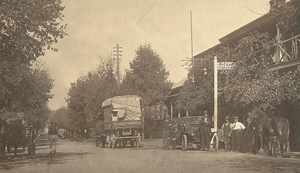
Below are some old images of Hahndorf's main street - hard to know the date with telegraph (or electricity?) poles, horses and carts and some mature trees.


After our difficult journeys, rich moist luscious cake with lashings of cream was the refreshing goto thanks to Barb when conversation flowed all which way - including from our resident festival goer, Cherilyn, on her many escapades at the Fringe.

Next meeting is on 11 May 2022, at Mog's place - and selections are

  • Mog - The moment of lift by Melinda Gates (Mog apologises for its length in advance)
  • Cherrie - Scary Monsters by Michelle De Kretser (good luck navigating that one Mog!)

Other recommended reads are

  • The seven husbands of Evelyn Hugo by Taylor J Reid
  • Still Life by Sarah Winman
  • The girls of slender means by Muriel Spark


Monday, December 13

2022 - a new year and a new look for the FnB Club


This is really a reminder of the 2022 schedule and first set of books for next year - but enjoy the action too

9 March 2022 at Barb's place.  Books are

  •     Barb - The Lincoln Highway by Amor Towles
  •     Cherilyn - Devotion by Hannah Kent

11 May 2022: Mog and Cherrie

13 July 2022: Megan and Kathy

14 September 2022: Margie and McLassie

9 November 2022: Julie and Sue

First named is the host unless there is a switcheroo in the meantime.


Sunday, November 28

The mysteries of god, the meaning of life - and lunch


Table trier
The flowers were blooming as we gathered at Hindmarsh Valley for our spring lunch, the last FnB Club meeting for 2021.  Missing blooms were Megan, Margie and McLassie - yes, all starting with 'M' but with good apologies all.

Mystery bounded out to greet everyone and continued to make merry mischief throughout the afternoon.  We were intrigued and amused by Cherrie's story about 'clackers', steam boats and holely jackets as we sat down to lunch of Spanikopita and salad.  (And for those interested here is the link to the recipe - https://www.goodfood.com.au/recipes/haloumi-spanakopita-20210601-h1w7mq).

After the Spanikopita went down Julie introduced her choice, 'Lapsed' by Monica Dux -  a reverie of Monica's take on Catholicism, and how and why Dux now 'blows raspberries' at the church.  And its at this point that your correspondent confesses her mind wasn't focussed enough on the task at hand - any mental acuity was sadly directed to the lunch table rather than the main book game.   But here goes with a quick summary of the chatter.

Moggies natives

It all starts with baptism - and once that's done, there is no escaping the Catholics - no matter what spiritual revelations you have during your lifetime.   In short, you're hooked, and you're part of the 'cult' - like it or not.  There were various personal reflections on dancing with religion during our youth around the table - some humorous and some lifechanging - which added to the way we each read the book and to discussion.

Some of us took the view that the book was cathartic and centred around Monica's view de monde - because in a way it was her autobiography coupled with her interaction with the Catholic church.  From this perspective it would have been good for the book to have a broader discussion on religion and bring in other viewpoints -  and yet we all agreed there was revelation for most of us within the pages of the book.  From an editorial point of view, the other main point of discussion was around how the book could have benefited from more use of the red marker pen - most thought the first third and last section of the book well worth reading, but the middle bit not so much.  

Sue's home bunch
Having dragged those short paras from my clouded grey matter, you may prefer to follow Julie's pre-recorded overview - 

Cherrie's sweet peas
Monica Dux - was a founding board member of the Stella Prize and the Feminist Writers Festival.  In a former life, she researched history at the University of Melbourne and worked at Melbourne Uni Publishing, and on the Monthly magazine.  She has authored Lapsed, Things I didn't Expect (when I was expecting), co-authored The Great Feminist Denial and editor of Mothermorphosis.   Dux's mother is Catholic and her father is Anglican (and a former Freemason) who were almost not allowed to be married.  She grew up a devout catholic and was raised to believe that the Jesus story was 100% true.  She was sold stories as truth - like the fact that rosary beads turned into gold; water healed the sick; and statues of the Virgin Mary bled or wept real tears.  (Ed note:  REALLY?)

While she found Mass "crushingly boring" for a time she regarded not being Catholic as "an abnormality that some people were burdened with, not to mention a terrible danger to their immortal souls".  By the time she reached University things had changed.  Dux had facial piercings, rode a motorbike and had a 'sinful sexual life'.  today, Dux says she blows 'figurative raspberries at the Church'.  

Her latest dilemma has settled in the form of her 6 year old daughter, who despite growing up in a secular household, comes home one day and announces that she wants to be a Catholic, and is desperate to be baptised.   Despite the devastating conundrum she finds herself confronting Dux admits there remain residual forces of the lived-in stories that accompanied her through her own childhood.  'The Jesus spells continue to have a kind of power over me" she explains.  "The story of Christ can still move me in a way that defies the cynical atheism I claim to embrace".  The wondrous and devoted good Catholic girl has morphed into an adult cynical atheist, yet she remains appreciative of what her religion gave her as a child - "tremendous certainty and reassurance....the sense of order, of community and comfort".

In Lapsed Dux explores the various forms of modern day Catholic bigotry that have plagued her own family and community, weaving in a deft survey of Catholic theology, 'cultic segregation' and the day to day impact of sectarianism.  Dux scrutinises the vast wave of interpretations of Catholic morality with a tone of clarity and humour - "Everyone is seeking truth and goodness and beauty, each in their own way". 
Dux shows compassion, curiosity and care towards the religion that had shaped her youth.  Watching her extend those qualities towards those closest to her felt like a mini-revelation on why writers write.  

"Jesus is a f...wit" says her six year old daughter towards the end of the book.  "He was a boy and all boys are idiots" she concluded - and that was the end of her Catholic odyssey.  

I found the book a challenge to the Catholic Church.  It was a humourous lookat the ruituals, magical thinking of saints - but a challenge to the horrific legacy questions surrounding abuse.  Dux conceded that Baptism counts you 'in', so there is no getting completely away.  Many still participate but don't believe.  The rituals and moral upbringing from childhood are never quite expnunged and leave an indelible mark on lapsed or non-lapsed Catholics.  While in other forms of Christian belief, the rituals are not as robust or magnified.  Dux concludes there are 2 groups - the Team Homonious - the old group - and Team Authentic - new group.  But there is no doubting once a Catholic, always a Catholic. 

After some deep breaths and dessert, we moved on to Klara and the Sun, by Kazuo Ishiguro.  It was full tilt charge into discussion about the book which was narrated by Klara, the Artificial Friend (AF) of Josie.  There was broad consensus that Klara was an engaging narrator - simple, naive and dignified - always wanting to understand the humans in her 'life', while observing everything through 'grids'.   Looking for the positive was Klara's MO - and we reflected on her trip through the field with Rick's help to the shed; her obsession with how the Sun was going to save Josie, and how she was going to save everyone from the pollution caused by the Cootings' machine.   Relentless was a word thrown around about the writing - there was restraint as it unpretentiously moved onwards, keeping us in suspense in a disquieting kind of way.  As we discussed the various characters and the storyline (Josie's 'illness' from being 'lifted', her departed sister, and her mother's 'fix' through the portrait/Klara,) we reflected on the depth of the themes in the book -

  • the nature of love (eg comparing the actions of Josie's mother with her father - how far should a parent go?); the youthful connection between Rick and Josie compared with the 'interaction' scene
  • what is it to be 'human' - so why did we relate to Klara? (answer - because she was so gentle and lovely!)
  • what will technology do in the future - the 'post employed' life of Josie's father + being 'lifted' and not 'lifted  = the potential for social dysfunction.  And the big question posed by Stephen Hawking and channelled through Cherrie - will AI take over humans in the end?
  • sacrifice -  Klara's offering to the Sun, which lead to her ending up on the scrapheap of AF (and here was a moment to reflect on the meaning of life).

The short biographical sketch of K Ishiguro revealed he was born in Nagasaki in 1954, moved to England with his family at the age of 5, studied Arts and Philosphy at Kent University, then did a Masters in
Creative Writing (probably after his stint as a grouse beater for the Queen Mother at Balmoral).  And from there he never looked back.  Other KI books that were mentioned included Remains of the Day (1989) and Never Let Me Go (2005) - and you can find the film Remains of the Day on Netflix and yes there was a film made of Never Let Me Go (with Kierah Knightly) but I'm not sure where you'll find it (but I have the book if anyone wants to borrow it).

And finally we talked about 2022 and decided to set the second Wednesday of alternate months, so based on the order last year, it looks like this (first name is host unless everything changes or I've got something wrong).

9 March 2022 at Barb's place.  Books are

  •     Barb - The Lincoln Highway by Amor Towles
  •     Cherilyn - Devotion by Hannah Kent

11 May 2022: Mog and Cherrie

13 July 2022: Megan and Kathy

14 September 2022: Margie and McLassie

9 November 2022: Julie and Sue

Happy reading - and if you're interested the Australia Reads National Reading Survey report has just come out:

75 per cent of us have read at least one book in the past 18 months or so. According to the report, the pandemic didn’t have a great impact on reading habits. A tad more than 50 per cent of respondents said they were reading the same amount and buying the same number of books as before it emerged, which is interesting because last year, according to NielsenBookScan, which collects data from booksellers around the country, sales of books in Australia increased by 9 per cent compared with 2019, giving a revenue boost of 8 per cent. About 66 million books were sold with a total value of $1.2 billion.

Not surprisingly there was a slight increase in buying online, according to the Australia Reads survey, as bookshops were closed to physical shoppers at times throughout the period and many consequently cranked up their online operations.

So, what are we reading? Well, 68 per cent of us like to read Australian authors, and 35 per cent also like to read the classics. More than half of us wish for more reading time