Saturday, May 14

Lyle, Lili, Michelle and Melinda

Our bi-monthly rendezvous took place at Mog's place on 11 May to discuss Mog's choice, 'The moment of lift' by Melinda Gates, and Cherrie's selection, 'Scary Monsters' by Michelle de Kretser.   Three of our group missed the discussion and the yummy cake - Julie and Kathy were separately in iso, and McLassie was tied up in family affairs.    

Bonnie wasn't happy at having to move from the comfiest chair in the room but after she was rescued by Jeremy, Cherrie introduced us all to Michelle de Kretser and her book.  Flipping through her 4 pages of notes, Cherrie recounted her recent interview at Writers Week.  It was an informative exchange with some puzzling quotes from Michelle - but the big question was who or what were the 'Scary Monsters'?  We all had our different views to begin with but somehow they coalesced through our discussion of the book/s.   There was a lot to talk about - with 2 novellas (Lyle and Lili), comparing the two and flipping the essence of the bridge (yes if you can make sense of that last phrase you apparently can talk Michelle's language).  So to the novellas 

First to Lyle - a dystopian view of the sadly not too distant future narrated by the rather insipid namesake of the novella.   We followed Lyle around his Department, home and life, discovering along the way that casting a pale shadow seemed to be his key survival strategy.  Yet throughout the bleak outlook of the story was woven de Krester's acerbic wit which went someway to lightening the storyline.  But the dark threads were real - with racism, disinterest, and greed (or at least indifference to the life of the elderly) to the fore.  Ivy and the Amendment drove our discussion down rabbit holes that we probably didn't want to grapple with - and yes we found more scary monsters (think ageing, losing control and end of life).   So we moved on to the next one....

Lili - a very different book.  It was a walk through the past and a short though very graphic reflection on the overseas experience of a young female teacher in France.   In some ways it was about Lili's rite of passage into adulthood - where she wanted to be like Simone de Beauvoir and ooze confidence (no small aspiration there!).  There was no real storyline, rather it was a character based, fast paced, explosion of a novella.   Everywhere was colour (including Minna's wardrobe and hair), yet it was all grounded in Lili's fear of the scary monsters.  Think racism again, youthful uncertainty, and killers roaming the streets.  There were odd relationships along with weird neighbours with weird names (I for one was glad that no light was shed on Candlewoman), and strange encounters on the stair/landing/dunny.   We were all thankful again for the wry humour woven through this novella, and found ourselves caught up in Lili's escapade through the south of France, and side trips to Italy and Sardinia.   (And who was John Berger? - you can find out more here if you must - https://www.theguardian.com/books/2017/jan/02/john-berger-obituary)

Cherrie worked her way through her notes and admirably led us along the pathway of these two unrelated but conceptually connected stories.  It soon became clear that there were common themes around the scary monsters, even though there were divergent views and interpretations about the book/s in the room.   But we all agreed it was a classic book club book - invoking great discussion, making us confront our own scary monsters, with many laughs along the way, and in the end expanding our minds in many different directions to try and make sense of it all.  There was general agreement it was a strange book but a great choice.

You can bridge the essence and listen to MdK talking about her book at this link - 

https://www.rrr.org.au/on-demand/segments/backstory-not-your-average-scary-monster-with-michelle-de-kretser

And I can't leave this part without posting a picture of the scary monsters Cherilyn has renamed Lyle and Lili

Lyle in front; Lili behind

After the lengthy discussion of scary monsters we didn't have a lot of time for Mog's book, The moment of Lift.  Chosen during the dark times of the pandemic and Ukraine, Mog explained her choice was driven by the need to be uplifted.  We all felt the same.  Mog gave us a summary of Melinda Gates' life up to her divorce and how Bill's link with Epstein was the last straw for her.  Moving out from Bill's shadow and into the world in her own right, Melinda has certainly made her mark.  Moment of Lift is a personal statement  about the importance of investing in women and health, which Melinda has been fortunate enough to be able to do in spades.  Her first steps were into funding for family planning in third world countries - and that moved her further into encouraging women everywhere to have access to jobs.  Our chat took a slight deviation at this point - into wonderment about how our generation of women managed a home, children AND work - and how this has moved the goalposts for the next generation where men (well, some at least) now lean in to do their share (or is it sometimes more than their share was a question posed here; and I'm definitely not going there).  

Amongst our group, the view was that the first half of the book was a bit of a slog, but the second half was redeeming in that the presentation of her main argument was a moment of lift - her argument being that pulling the gender equity lever lifts everybody.   YOU GO GIRL!

After confronting our scary monsters we were lifted up and ready for Mog's yummy carrot and walnut cake, tea, along with more uplifting chatter - before a few of us had to set off on the road to deflation and suffer the delays caused by night roadworks on the long drive home.  

Next meeting is on 13 July 2022, at either Megan or Kathy's place; and the books are:

Megan: The Garden of Broken Things by Francesca Momplaisir

Kathy: Rattled by Christine Coppa

Sunday, March 13

The Road to ....

We went on a few journeys over the Christmas/New Year break with our first book selections for 2022.   There was an American odessey along the Lincoln Highway in the 1950's; and then the big 'bound for South Australia' ship trip in the 1830's.   So what did we find out at our first FnB club meeting for 2022?  

  • The Lincoln Highway was very readable but there was uncertainty in the group about where it was really going? (Yes, we now know the Lincoln Highway was the first main road to trans-America but think metaphoric rather than geographic).
  • Thanks to Barb, we found out Amor Towles is quite good looking and speaks well.
  • He was educated at Yale and chose to set his book during 10 days in 1954 for reasons that he explained on Youtube (it was before the pill; just after the release of the Kinsey Report/s; before the Beatles; before the Cold War; between the Korean War and the war in Vietnam) - but for some of us at least the reasons he gave didn't really get to the nub of why he chose 1954.  
  • The main characters were interesting - and out of the 8, Billy was probably the favourite.  
  • Some bookclubbers felt sorry for Duchess's ending; others not so much.  Everyone liked Sally too - what was there not to like about her free spirit and sensible approach to life
  • Most liked the voices in the book and the perspectives each brought - but some found the structure off-putting - it left you hanging on the characters' telling of the tale as it went along.  And why were the chapters numbered backwards?  (So the BIG Question for Mog was; did you, as usual, read the last chapter first and if so was it the the first last, or the last first?)
  • Ulysses was a hero and kept travelling on the trains - but did he ever find his wife and son???
  • Everyone in the book was searching for someone or something - and the only one who really found it in the end was Woolly - but look how finished up?
  • Was it another modern retelling of The Odyssey?  Is happiness really found over the hill or at the end of a rainbow - or the highway??  These are the questions we were asking - and maybe thats what Amor really wanted us to ask ourselves.
  • And the apres book decision: Amor Towles best book is probably Rules of Civility, though some might think it a tie with A Gentleman in Moscow. 


We then dove headlong into Cherilyn's selection, 'Devotion', by Hannah Kent.

  • Cherilyn introduced us to Hannah's 3rd book, overviewing it as a journey to freedom for 2 young women - but there was a lot of pain along the way.  From the harsh family life back in Prussia, to the long sea voyage to SA, and ending with the colonising spirit that did everything it could to change the natural landscape and subdue/remove the indigenous inhabitants - it was certainly no fairy tale
  • It was unabashedly about female love (Hanne and Thea) which lifted the book - but some readers weren't sure it did enough to help them in their read about the journey to the other side of the world to find the light
  • Hanne and Thea were kindred spirits - a love of nature was one of the many elements that drew them to each other, and this was an affirming part of the book that helped bring it together
  • The colonisation of the area around Hahndorf was graphic and disturbingly written about by Hannah K 
  • Some readers thought the book's approach was overly sentimental - humour didn't get much of a look in and this possibly compounded the overall feeling that the book was interesting but something was missing
  • a few of us didn't get to this book (putting my hand up here)  ðŸ‘‹  but found the conversation interesting
  • And the final consensus was..... maybe not her best book - clearly an homage to her life partner - and brownie points for the strong local connection
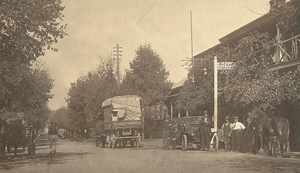
Below are some old images of Hahndorf's main street - hard to know the date with telegraph (or electricity?) poles, horses and carts and some mature trees.


After our difficult journeys, rich moist luscious cake with lashings of cream was the refreshing goto thanks to Barb when conversation flowed all which way - including from our resident festival goer, Cherilyn, on her many escapades at the Fringe.

Next meeting is on 11 May 2022, at Mog's place - and selections are

  • Mog - The moment of lift by Melinda Gates (Mog apologises for its length in advance)
  • Cherrie - Scary Monsters by Michelle De Kretser (good luck navigating that one Mog!)

Other recommended reads are

  • The seven husbands of Evelyn Hugo by Taylor J Reid
  • Still Life by Sarah Winman
  • The girls of slender means by Muriel Spark


Monday, December 13

2022 - a new year and a new look for the FnB Club


This is really a reminder of the 2022 schedule and first set of books for next year - but enjoy the action too

9 March 2022 at Barb's place.  Books are

  •     Barb - The Lincoln Highway by Amor Towles
  •     Cherilyn - Devotion by Hannah Kent

11 May 2022: Mog and Cherrie

13 July 2022: Megan and Kathy

14 September 2022: Margie and McLassie

9 November 2022: Julie and Sue

First named is the host unless there is a switcheroo in the meantime.


Sunday, November 28

The mysteries of god, the meaning of life - and lunch


Table trier
The flowers were blooming as we gathered at Hindmarsh Valley for our spring lunch, the last FnB Club meeting for 2021.  Missing blooms were Megan, Margie and McLassie - yes, all starting with 'M' but with good apologies all.

Mystery bounded out to greet everyone and continued to make merry mischief throughout the afternoon.  We were intrigued and amused by Cherrie's story about 'clackers', steam boats and holely jackets as we sat down to lunch of Spanikopita and salad.  (And for those interested here is the link to the recipe - https://www.goodfood.com.au/recipes/haloumi-spanakopita-20210601-h1w7mq).

After the Spanikopita went down Julie introduced her choice, 'Lapsed' by Monica Dux -  a reverie of Monica's take on Catholicism, and how and why Dux now 'blows raspberries' at the church.  And its at this point that your correspondent confesses her mind wasn't focussed enough on the task at hand - any mental acuity was sadly directed to the lunch table rather than the main book game.   But here goes with a quick summary of the chatter.

Moggies natives

It all starts with baptism - and once that's done, there is no escaping the Catholics - no matter what spiritual revelations you have during your lifetime.   In short, you're hooked, and you're part of the 'cult' - like it or not.  There were various personal reflections on dancing with religion during our youth around the table - some humorous and some lifechanging - which added to the way we each read the book and to discussion.

Some of us took the view that the book was cathartic and centred around Monica's view de monde - because in a way it was her autobiography coupled with her interaction with the Catholic church.  From this perspective it would have been good for the book to have a broader discussion on religion and bring in other viewpoints -  and yet we all agreed there was revelation for most of us within the pages of the book.  From an editorial point of view, the other main point of discussion was around how the book could have benefited from more use of the red marker pen - most thought the first third and last section of the book well worth reading, but the middle bit not so much.  

Sue's home bunch
Having dragged those short paras from my clouded grey matter, you may prefer to follow Julie's pre-recorded overview - 

Cherrie's sweet peas
Monica Dux - was a founding board member of the Stella Prize and the Feminist Writers Festival.  In a former life, she researched history at the University of Melbourne and worked at Melbourne Uni Publishing, and on the Monthly magazine.  She has authored Lapsed, Things I didn't Expect (when I was expecting), co-authored The Great Feminist Denial and editor of Mothermorphosis.   Dux's mother is Catholic and her father is Anglican (and a former Freemason) who were almost not allowed to be married.  She grew up a devout catholic and was raised to believe that the Jesus story was 100% true.  She was sold stories as truth - like the fact that rosary beads turned into gold; water healed the sick; and statues of the Virgin Mary bled or wept real tears.  (Ed note:  REALLY?)

While she found Mass "crushingly boring" for a time she regarded not being Catholic as "an abnormality that some people were burdened with, not to mention a terrible danger to their immortal souls".  By the time she reached University things had changed.  Dux had facial piercings, rode a motorbike and had a 'sinful sexual life'.  today, Dux says she blows 'figurative raspberries at the Church'.  

Her latest dilemma has settled in the form of her 6 year old daughter, who despite growing up in a secular household, comes home one day and announces that she wants to be a Catholic, and is desperate to be baptised.   Despite the devastating conundrum she finds herself confronting Dux admits there remain residual forces of the lived-in stories that accompanied her through her own childhood.  'The Jesus spells continue to have a kind of power over me" she explains.  "The story of Christ can still move me in a way that defies the cynical atheism I claim to embrace".  The wondrous and devoted good Catholic girl has morphed into an adult cynical atheist, yet she remains appreciative of what her religion gave her as a child - "tremendous certainty and reassurance....the sense of order, of community and comfort".

In Lapsed Dux explores the various forms of modern day Catholic bigotry that have plagued her own family and community, weaving in a deft survey of Catholic theology, 'cultic segregation' and the day to day impact of sectarianism.  Dux scrutinises the vast wave of interpretations of Catholic morality with a tone of clarity and humour - "Everyone is seeking truth and goodness and beauty, each in their own way". 
Dux shows compassion, curiosity and care towards the religion that had shaped her youth.  Watching her extend those qualities towards those closest to her felt like a mini-revelation on why writers write.  

"Jesus is a f...wit" says her six year old daughter towards the end of the book.  "He was a boy and all boys are idiots" she concluded - and that was the end of her Catholic odyssey.  

I found the book a challenge to the Catholic Church.  It was a humourous lookat the ruituals, magical thinking of saints - but a challenge to the horrific legacy questions surrounding abuse.  Dux conceded that Baptism counts you 'in', so there is no getting completely away.  Many still participate but don't believe.  The rituals and moral upbringing from childhood are never quite expnunged and leave an indelible mark on lapsed or non-lapsed Catholics.  While in other forms of Christian belief, the rituals are not as robust or magnified.  Dux concludes there are 2 groups - the Team Homonious - the old group - and Team Authentic - new group.  But there is no doubting once a Catholic, always a Catholic. 

After some deep breaths and dessert, we moved on to Klara and the Sun, by Kazuo Ishiguro.  It was full tilt charge into discussion about the book which was narrated by Klara, the Artificial Friend (AF) of Josie.  There was broad consensus that Klara was an engaging narrator - simple, naive and dignified - always wanting to understand the humans in her 'life', while observing everything through 'grids'.   Looking for the positive was Klara's MO - and we reflected on her trip through the field with Rick's help to the shed; her obsession with how the Sun was going to save Josie, and how she was going to save everyone from the pollution caused by the Cootings' machine.   Relentless was a word thrown around about the writing - there was restraint as it unpretentiously moved onwards, keeping us in suspense in a disquieting kind of way.  As we discussed the various characters and the storyline (Josie's 'illness' from being 'lifted', her departed sister, and her mother's 'fix' through the portrait/Klara,) we reflected on the depth of the themes in the book -

  • the nature of love (eg comparing the actions of Josie's mother with her father - how far should a parent go?); the youthful connection between Rick and Josie compared with the 'interaction' scene
  • what is it to be 'human' - so why did we relate to Klara? (answer - because she was so gentle and lovely!)
  • what will technology do in the future - the 'post employed' life of Josie's father + being 'lifted' and not 'lifted  = the potential for social dysfunction.  And the big question posed by Stephen Hawking and channelled through Cherrie - will AI take over humans in the end?
  • sacrifice -  Klara's offering to the Sun, which lead to her ending up on the scrapheap of AF (and here was a moment to reflect on the meaning of life).

The short biographical sketch of K Ishiguro revealed he was born in Nagasaki in 1954, moved to England with his family at the age of 5, studied Arts and Philosphy at Kent University, then did a Masters in
Creative Writing (probably after his stint as a grouse beater for the Queen Mother at Balmoral).  And from there he never looked back.  Other KI books that were mentioned included Remains of the Day (1989) and Never Let Me Go (2005) - and you can find the film Remains of the Day on Netflix and yes there was a film made of Never Let Me Go (with Kierah Knightly) but I'm not sure where you'll find it (but I have the book if anyone wants to borrow it).

And finally we talked about 2022 and decided to set the second Wednesday of alternate months, so based on the order last year, it looks like this (first name is host unless everything changes or I've got something wrong).

9 March 2022 at Barb's place.  Books are

  •     Barb - The Lincoln Highway by Amor Towles
  •     Cherilyn - Devotion by Hannah Kent

11 May 2022: Mog and Cherrie

13 July 2022: Megan and Kathy

14 September 2022: Margie and McLassie

9 November 2022: Julie and Sue

Happy reading - and if you're interested the Australia Reads National Reading Survey report has just come out:

75 per cent of us have read at least one book in the past 18 months or so. According to the report, the pandemic didn’t have a great impact on reading habits. A tad more than 50 per cent of respondents said they were reading the same amount and buying the same number of books as before it emerged, which is interesting because last year, according to NielsenBookScan, which collects data from booksellers around the country, sales of books in Australia increased by 9 per cent compared with 2019, giving a revenue boost of 8 per cent. About 66 million books were sold with a total value of $1.2 billion.

Not surprisingly there was a slight increase in buying online, according to the Australia Reads survey, as bookshops were closed to physical shoppers at times throughout the period and many consequently cranked up their online operations.

So, what are we reading? Well, 68 per cent of us like to read Australian authors, and 35 per cent also like to read the classics. More than half of us wish for more reading time


Thursday, September 16

Storytelling and Strong Women

Storytelling and strong women from near and far


Mystery and Banjo were happily pulling apart Port Elliot as we all gathered at McLassie’s place for our September meeting.  Barb was an apology and we all wait to hear that her airsacs are filling up regularly again (a pox on pollen we all thought).  After avoiding her classy new paintwork, McLassie settled us down around 7.15 and then led us down the historical pathway from all parts of the globe to the Eureka Stockade in 1854 with her choice ‘The Forgotten Rebels of Eureka’.

Her overview covered author Claire Wright’s background, the research needed to pull together the book (one of a trilogy), and McLassie’s decision to choose the book.  Her own reflection on her choice was in the end ambiguous – important to read but more of a textbook than a great read.


We all agreed that the reason for McLassie’s choice was well grounded - inspired by the torchlights shining on gender equality in recent months and years (especially in Australian politics but elsewhere as well).    The book told many stories about disenfranchised people from many places, making perilous sea journeys, then walking to the goldfields to try and find a life worth living.  It was a book about immigration, hardship, suffering, making do, and rebelling against authority – and especially about the heroic women who have been hidden in historical accounts of the Eureka Stockade.    Wright drew parallels with women becoming politically mobilised elsewhere around the time (French Revolution and later, Britain, Europe), and argued that the legend of the Eureka Stockade being the ‘birthplace’ of democracy in Australia does not account for the important role of half the population of Ballarat at the time.  Her argument was that women not only provided the economic backbone of the settlement, but some were at the Stockade and contributed to the fight as well – and they have been well hidden by history.


Most of us thought the book would have been improved by focussing on the stories of a few at the goldfield – rather than the snippets of information we learnt about many of the settlers.  Most of our comments drew on the slim knowledge gained from our Australian history classes of the 1960s and included the fact that no one from China made an appearance in the book (given the road from Robe was well travelled).  But the book was unapologetically about women and their part in the social fabric of colonial Ballarat and the uprising.  While a good read it wasn’t – an important book it was.   Perhaps not the Forgotten Rebels, but the hidden rebels of history – as it has ever been so.  (Come on down Felix Mendelssohn said Cherrie, and we can all add many others such as the film Hidden Figures).


We moved on from Australia in 1854 to Australia in 2000’s and Slovenia/Egypt in the 1930’s through our next book, Marg’s choice - The Three Burials of Lotty Kneen, by Lotty’s grand-daughter, Krissy Kneen.   Drawn to the choice because it was a story of immigration, Marg introduced us to this unusual book – a search for family and belonging involving dragons, DragonHall in outback Queensland, mysteries in Slovenia, trauma and revelations in Egypt – and then there was the author sitting in the middle of everything writing about her own insecurities and being an outsider.  It was easy to not believe all of the stories told in the book (dragons aside - we all believed that one!) – but Marg’s judicious research demonstrated otherwise.   


Sprinkling her matriarchal grandmother’s ashes in 3 places as she somewhat defiantly travelled through her grandmother’s past, it was storytelling verging on fairytale verging on  memoir.  Poetry was also infused into the narrative at times further complicating the book’s literary jumble.  It ultimately told a story of ancestors, how we can’t escape the past, and maybe coming to terms with ourselves in a complex world (I’m not so sure about the last one – KK was pretty mixed up!).    Some of us weren’t convinced however.  It wasn’t an easy read and for some it was frustrating to have the author place herself at the front of the narrative at times.   But we were captivated by Mog’s discussion about trauma and how it can pass from one generation to another – which seemed to be another line put forward in this book.   Yes, there is always a silver lining, though some of us are still looking for it with this one.


A welcome relief was the special healthy but ‘not quite’ chocolate cake a la Marg and the social goss, including outrage at the news of payment of Porter’s legal fees by a blind trust – with consensus that even Blind Freddy could have picked this was simply not on. 


Before moving on to our next meeting, it must be said that everyone has their fingers crossed for Megan and her next appointment with the specialist when a treatment plan will be outlined to her and Andrew – we all hope the road is as smooth as it possibly can be, and be assured we FnB’s are here on call to do whatever we can to make it easier.


Next meeting is scheduled for Friday 5 November 2021, with lunch at Hindmarsh Valley.  A reccy email will be sent closer to the time to check the time/day change still works – if not, another Wednesday evening will be picked (maybe 10th).  So stay tuned.  Whenever we meet, the book selections are

Julie:  Lapsed, by Monica Dux

Sue: Klara and the Sun, by Kazuo Ishiguro

And as it was suggested K Ishiguro is worth listening to about his book, here is the link to the ABC interview with him about KandtheS (starts off with his interview then goes on to interviews with another author).

https://abcmedia.akamaized.net/rn/podcast/2021/03/bhb_20210301.mp3 for those interested in reading the book, and also those not so much.  


Now for something completely different - with thanks to Roy, Pierre and Kathy